
A guitar can be perfectly in tune on the open strings and still sound out of tune further up the neck. That is guitar intonation.
What is guitar intonation?
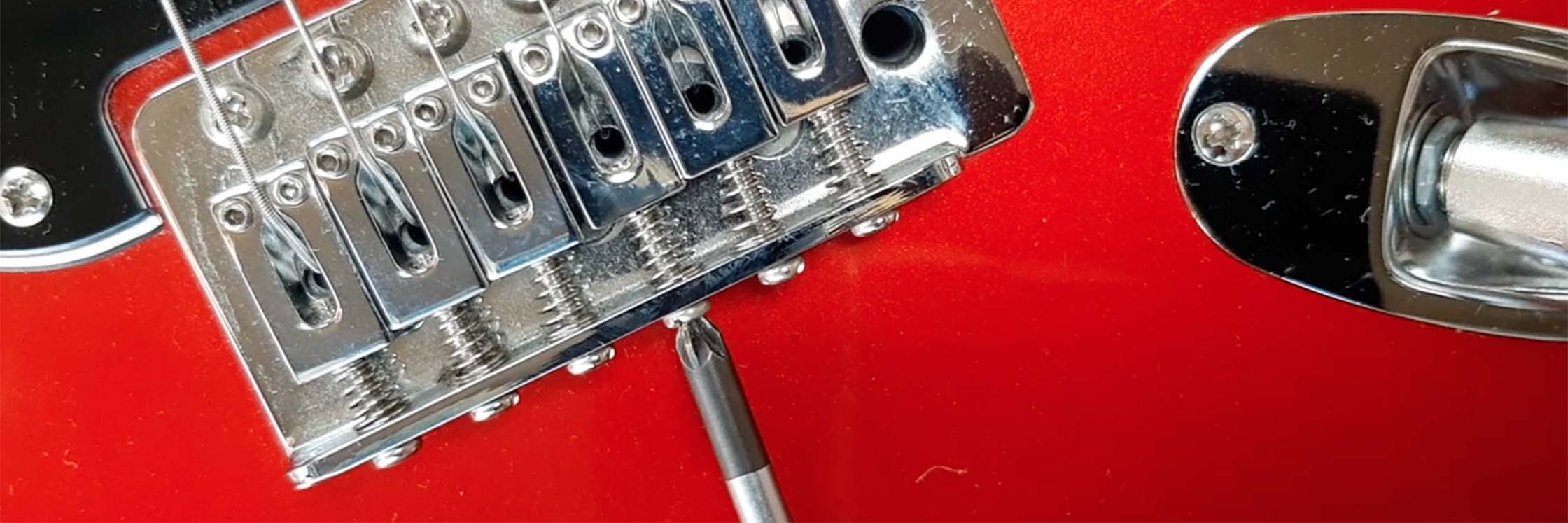
Guitar intonation is how accurately a guitar plays in tune as notes are fretted along the neck. When intonation is right, a note at the 12th fret is as in tune as the same note played open. It is set by adjusting the bridge saddles.
In tune open is not the same as in tune everywhere.
Signs of poor guitar intonation
- Chords sound fine near the nut but sour higher up the neck
- The guitar needs retuning for different songs or positions
- Notes at the 12th fret sound sharp or flat compared to the open string
- Recordings sound slightly “off” even after tuning
What affects intonation
- A new string gauge or brand
- Changes to the action or neck relief
- Worn strings
- Heat, humidity and time
- Worn or badly cut nut or saddle slots
Part of a full guitar setup
Guitar intonation is usually the last step of a setup, after truss rod adjustment and guitar action adjustment. Changing either of those can shift the intonation, which is why the order matters.
Electric guitars usually have individually adjustable saddles. Acoustic and classical guitars often have a fixed saddle, where intonation is shaped by the saddle itself, so the approach is different.
Learn how to set it properly
The Skill Up Break Free guitar setup course covers guitar intonation step by step on electric, acoustic, bass and Floyd Rose guitars, alongside truss rod adjustment and action.