
If a guitar feels hard work to play, or buzzes whatever you do, the action is often the reason. Guitar action adjustment is what fixes it.
What is guitar action?
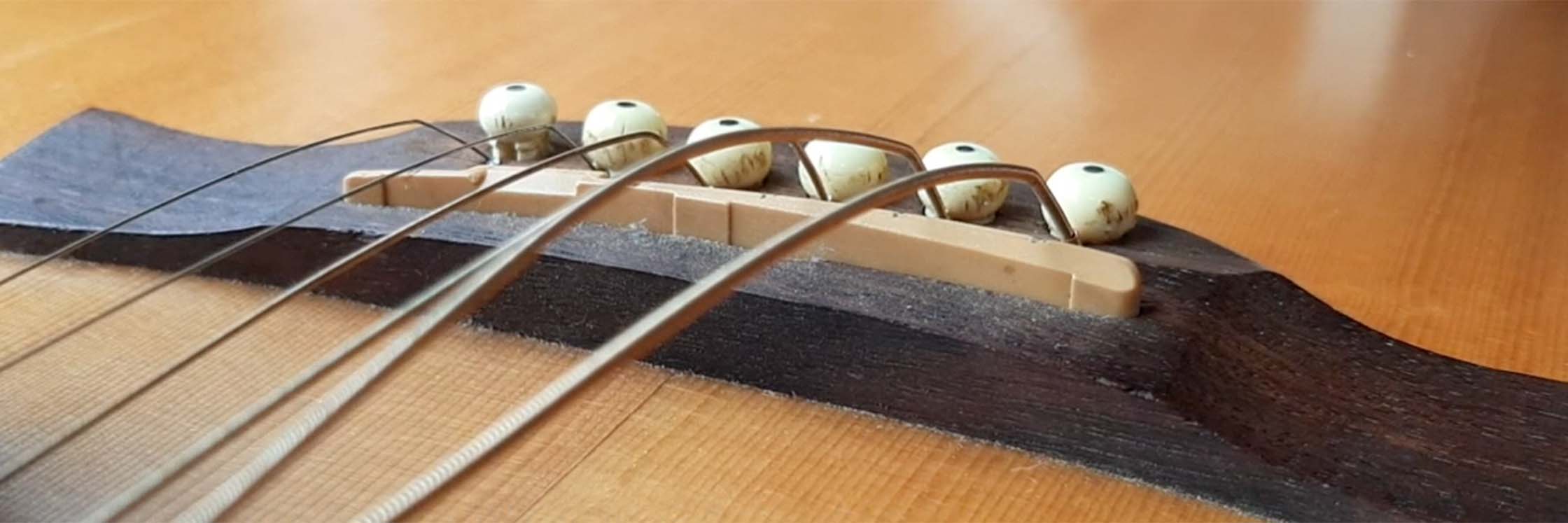
Action is the height of the strings above the frets. Low action feels easy to play but can buzz; high action plays cleanly but takes more effort to press the strings down.
Guitar action adjustment finds the balance for the guitar and the player – and it is set in two places: at the nut, near the headstock, and at the bridge saddles, at the body end.
Comfortable to play, clean to hear.
Signs a guitar needs a guitar action adjustment
- Chords feel stiff or tiring to hold, especially near the nut
- Strings buzz against the frets
- The first few frets play sharp
- The guitar feels different after new strings or a change of season
Nut action and bridge action
Nut action affects how easy the first few frets are to play. Bridge action affects string height along the rest of the neck. On electric guitars the bridge saddles are usually adjustable; on many acoustic and classical guitars the saddle has to be shaped instead, which cannot be undone – so knowing what you are doing matters.
Part of a full guitar setup
Action is adjusted after truss rod adjustment, because neck relief changes string height, and before guitar intonation, because action affects tuning up the neck. Doing things in the right order is what makes a setup work.
Learn how to do it properly
The Skill Up Break Free guitar setup course covers guitar action adjustment at the nut and bridge, step by step, on electric, acoustic, classical, bass and Floyd Rose guitars.