
Truss rod adjustment is one of the most important – and most misunderstood – parts of a guitar setup.
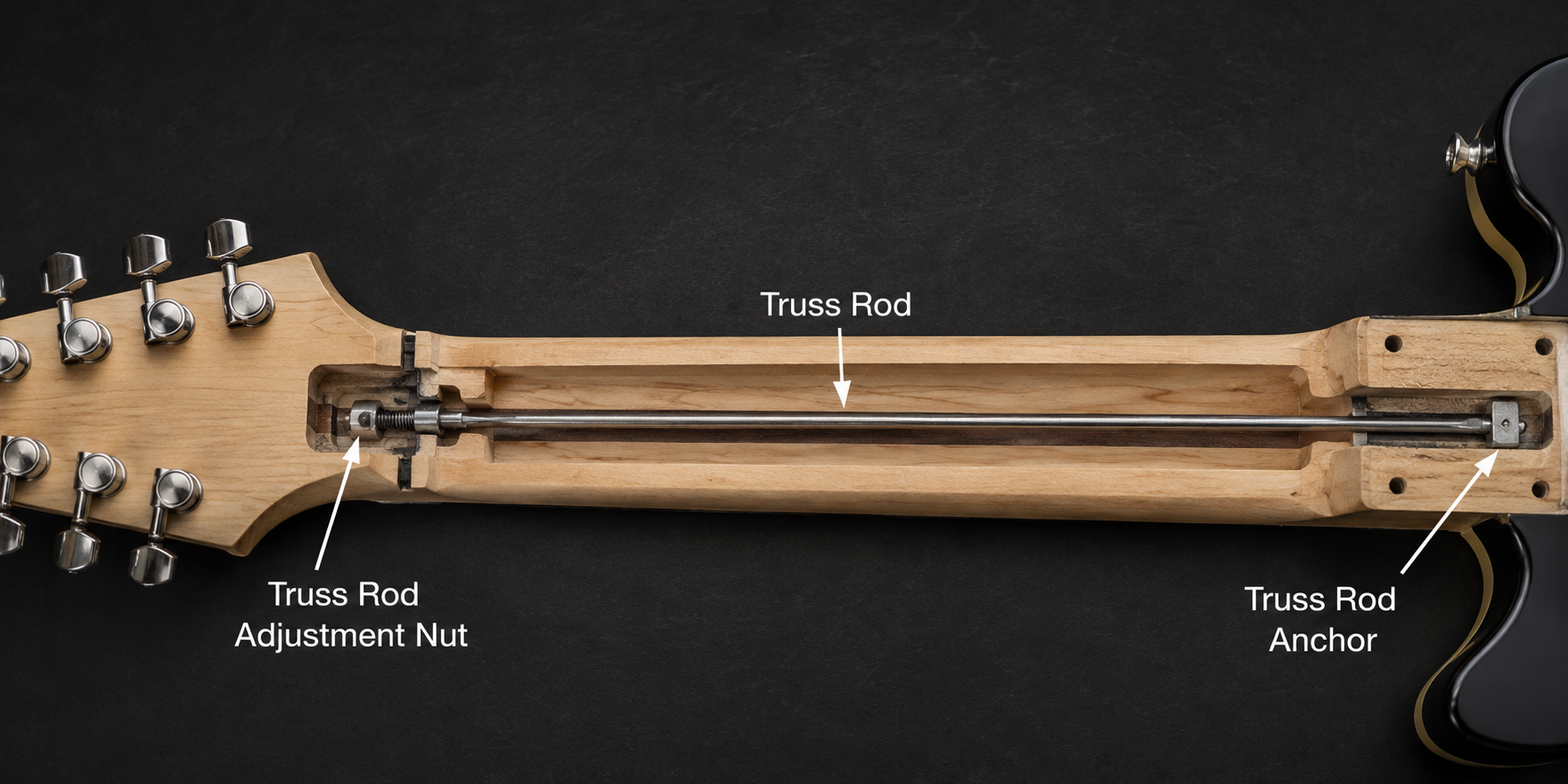
What does a truss rod do?
A truss rod is a metal rod that runs inside the neck of most steel-string guitars and basses. String tension pulls the neck forward; the truss rod pushes back against it.
A truss rod adjustment changes that balance, controlling how much the neck bows – known as neck relief. It is not for setting string height on its own, although the two are closely linked.
A straight-feeling neck starts inside the neck.
Signs a guitar may need a truss rod adjustment
- Strings buzz against the frets in the lower positions
- The action feels higher than usual, especially in the middle of the neck
- The guitar plays differently after a change of season, humidity or string gauge
- Notes feel harder to press down than they used to
Why neck relief changes
Wood moves. Changes in temperature and humidity, a new set of strings in a different gauge, or simply time can all shift the neck. That is why truss rod adjustment is a regular part of guitar maintenance, not a one-off fix.
Part of a full guitar setup
Truss rod adjustment is usually the first step of a setup, because it affects everything that follows: guitar action adjustment at the nut and bridge, and guitar intonation. Getting the order right is what makes a setup feel professional.
A note of caution
A truss rod can be damaged by forcing it, turning it too far, or using the wrong tool. If a rod will not turn, or the neck does not respond, it is worth learning the correct approach before going further.
Learn how to do it properly
The Skill Up Break Free guitar setup course covers truss rod adjustment step by step, including the tools, measurements and what to do with a truss rod that will not move – alongside action, intonation and more.